

Travel and fieldwork
- Advice for safe travel
-
Plan your travel carefully to help ensure that your trip can be completed as safely as possible.
Save important names and phone numbers on your mobile phone, and make sure your family or other close contacts have your contact information and return date.
Before departure, register the contact details of your next of kin or another designated contact person with your place of study or work.
Think ahead about what you should do if something happens during your trip. If you are in an area affected by an accident or other incident, contact your next of kin and your place of study or work as soon as possible.
Employees should book their travel through the travel agency with which their place of study or work has an agreement.
-
- Advice for safe travel abroad
-
Register your stay abroad (NO) with the Norwegian Ministry of Foreign Affairs and stay updated on their travel information (NO) and countries with travel advisories (NO).
Make a list of relevant emergency numbers and keep it at hand. Download the Norwegian Church Abroad’s emergency number app (NO) or look up local emergency numbers on Wikipedia.
Familiarise yourself with relevant local laws and regulations.
Check that your passport is valid and whether or not you need a visa or residence permit. Some countries require the passport to be valid up to 6 months after returning home. Keep your passport, visa and other important documents in a secure place and make copies of travel documents in case they are stolen. It can also be smart to bring two credit/debit cards.
Inform your place of study or work if your stay is interrupted or extended.
-
Advice for fieldwork
-
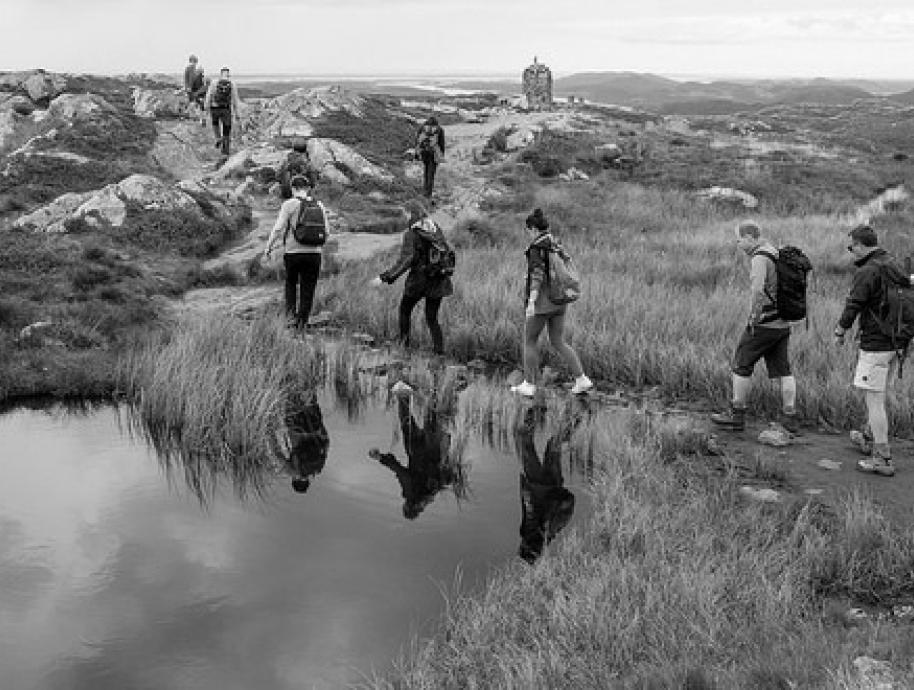
Fieldwork often involves different challenges and risks than working in familiar work and learning environments. What can you do to reduce risks, and what should you do if an unwanted incident still occurs? Review this list of things to consider before going on fieldwork (PDF) (NO).
Before fieldwork
The employer has a responsibility for health, safety and the working environment (HSE) for employees engaged in fieldwork (Working Environment Act, Sections 3-1 and 4-1) (NO), and a responsibility for students’ learning environment. A risk assessment of fieldwork is normally a requirement, not a recommendation, and should generally be approved by a manager or supervisor. Read more about risk assessments (sikresiden.no).
Carry out a risk assessment tailored to the assignment, together with colleagues or fellow students. Check the risk assessment procedures and templates used by your organisation. You should:
- Familiarise yourself with local conditions (e.g. healthcare, transport, communication, mobile phone coverage and weather).
- Ensure that you receive the necessary training (e.g. first aid and use of equipment).
- Make sure you know emergency procedures, emergency numbers and notification channels.
- Establish procedures for communication and check-ins, particularly when working alone or in remote areas.
- Create a notification plan (template).
- Register contact and next-of-kin information, and clarify where the information will be available and who should have access to it.
- Clarify insurance coverage and any necessary permits.
- Prepare a packing list and check the necessary equipment.
- Consider data security in relation to electronic equipment and how to secure information and equipment that should not be shared with everyone, e.g. on research cruises.
In meetings and interviews
Meetings and interviews with vulnerable or conflict-prone groups, as well as working alone, can also involve risks. Before such activities, you should therefore consider:
- Choosing an interview location where you have the opportunity to leave if necessary.
- Whether participation could pose a risk to the people you are interviewing. Consider anonymisation, secure storage and processing of data, and where and how you meet.
- Whether you need someone to accompany you to the interview/meeting, either to be present during the meeting or to wait nearby.
During fieldwork
Make sure that a colleague or supervisor knows where you are going, who you are meeting and when you expect to be finished. Agree on when you should report back after the meeting, and what should be done if you do not make contact.
Be aware of changes in the situation as you go along. If conditions become significantly different from those on which the risk assessment was based, you should stop and consider whether the plan needs to be changed or the fieldwork aborted. Read more about what you can do in a threatening situation (PDF).
When you return
Let someone know when you have returned, and consider conducting a brief review of what went well, if something should have been done differently, and whether the risk assessment should be updated.
Report incidents and near misses through the organisation’s incident reporting system. Contact your manager or occupational health service if you have experienced something as distressing or if there is anything you need to talk about afterwards.
-
Health and insurance
-
Bring any medication you need in the original packaging. Check with a pharmacy or doctor whether you need a certificate to bring medication to the country you are travelling to. Carry your important medicines in your hand luggage.
Check that you have the necessary vaccinations well in advance of your travel.
Get a European Health Insurance Card for stays in EU/EEA countries or Switzerland.
Check what kind of travel insurance you need.
- Keeping your information safe when travelling
-
When travelling, you may be more exposed to eavesdropping, malware attacks, hacking and theft. In addition, local authorities in some countries may require access to the contents of your devices.
Consider what you need: Before you travel, consider what information you actually need. Only bring confidential information if it is absolutely necessary. This applies to information stored on your laptop, tablet and mobile phone, as well as any information on paper. Check whether your organisation has dedicated IT equipment for travel, especially if you are travelling to countries with an increased risk of theft, espionage or intrusive border controls.
Secure your equipment: Make sure that your laptop and any external drives and USB flash drives are encrypted. Check that your operating system (Windows, macOS) and all the software you intend to use are up to date. If you have not already done so, it is a good idea to enable remote wiping on your mobile phone and tablet. Keep Bluetooth turned off on all devices. Make sure that multi-factor authentication (MFA) is enabled on the accounts you will use while travelling.
Work securely: Plan how you will communicate securely with your place of study or work. Use encrypted communication where possible, and use your organisation’s remote-access solution when working. Consider getting a privacy screen filter.
Keep your equipment safe: Do not leave your equipment unattended. Store your equipment in a way that makes it difficult to spot or steal. A hotel safe may provide some protection against opportunistic theft, but should not be considered a secure storage solution for sensitive information.
Use a secure network: Anyone can set up a wireless network and name it after an airport or hotel. Such networks can easily be monitored. Consider whether the task can wait, or use your own mobile network whenever possible.
Exercise restraint while travelling: Which conversations and electronic communications can wait until you return home? Perhaps you do not need to log in to your organisation’s systems while you are away? Avoid downloading software or updates while travelling. Avoid connecting to local equipment such as printers, and do not accept USB flash drives or use other unknown USB connections provided by people you do not know or given out as gifts at conferences.
Something seems strange? If your device behaves differently from usual, or you are concerned that someone may have tampered with it, seek assistance from your IT support team.
When travelling to areas with an increased level of risk, it may be appropriate to change the passwords for accounts you have used and contact IT support for a security assessment.
- Travel kit
-
For overnight trips, you should put together a small travel kit that is easily accessible.
Recommended content:
- Chargers and, if necessary, adapters for electronic equipment
- First aid equipment
- Flashlight
- Smoke detector
To install this app on your home screen: Press